


Growth is actually purple.
Strategy does not create growth. Neither does behaviour. But when the two meet, something happens. Here is what we have learned about the reality behind growth from more than 1000 transformation processes.
“Six months spent on strategy. A year on execution. No growth.”
Read the rapport by McKinsey & Company
The strategy was brand new, ambitions were high, and the initiatives were launched as planned. Twelve months later, everyday practice remained unchanged.
Not because the plan was wrong. Not because the will was lacking. But because one reality was designed while another was lived.
This is the reality in many organisations, and it is reinforced by a McKinsey study of 472 leaders who had all completed an organisational transformation.
The study paints a clear picture. Transformations lose a significant share of their potential value at every stage of the process – from setting objectives and planning to execution and follow-up.
As much as 37% of the lost value disappears during execution — precisely where the plan needs to be translated into everyday practice.
The key to success
The study also identifies four factors that are critical to success:
– The organisation understands why and supports the ambition.
– The necessary conditions and competencies to adopt new ways of working are in place.
– The infrastructure for momentum, follow-up and incentives is established.
– The ambition has multiple dimensions and extends beyond the bottom line.
Most organisations had one or two of these elements in place, but only 6% could tick all four.
Yet this is precisely where the key to success lies. It is the coherent approach that makes the difference.
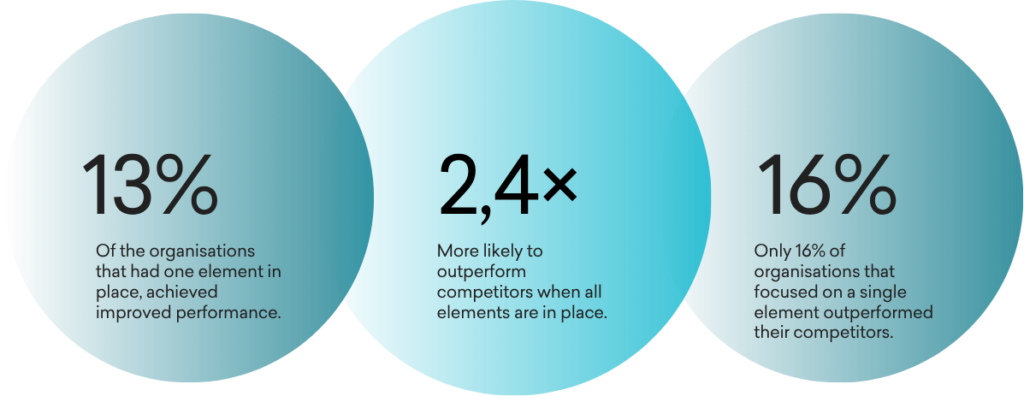
Only 13% of organisations that focused on a single element achieved improved and sustained performance. Among those that combined all four, the number was 96%.
Only 16% of organisations that focused on a single element outperformed their competitors. Among organisations that took a coherent approach, the number was 39%.
In other words, organisations are 2.4 times more likely to outperform their competitors when they address all four elements.
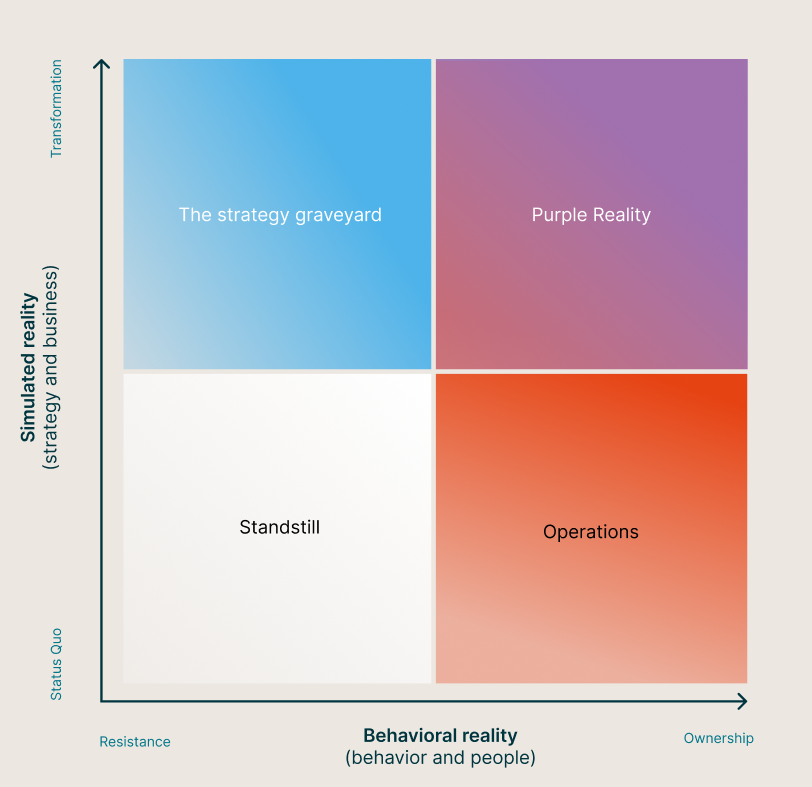
The problem is not the strategy itself. Nor is it people’s willingness to change. It is the gap between two realities — the simulated strategic reality and the behavioural reality.
We call this model the Transformation Quadrant.
Simulated reality
You will almost certainly recognise the simulated reality. Hours spent in meeting rooms. Visions displayed on the wall. Processes described in meticulous detail. Consultants presenting sharp market analyses.
The leadership team is sent away for three days of coaching, workshops and exercises — and returns full of energy.
The presentation goes well, everyone nods, and the programme receives top marks. One month later, everyday practice looks exactly as it did before.
The reality has been carefully designed, but it is never translated into behaviour.
Behavioural reality
Behavioural reality is what we see in everyday practice. Sellers call the same types of customers and have the same conversations. Leaders spend their days firefighting and clearing inboxes. Meetings run on autopilot.
You work hard and efficiently, but you keep moving in the same direction as before. You become better at what you already know how to do. It does not move you forward.
The intentions are good, but they are not connected to the strategy you have defined.
Most organisations alternate between the two realities — strategy without behaviour or behaviour without strategy.
Both create a sense of action and busyness, but neither creates growth. Growth emerges from the connection between them.
Purple Reality
Most organisations are shaped by two realities, neither of which, on its own, drives growth – whether in revenue, profitability or employee development.
The simulated reality of strategies, objectives, KPIs and processes. It is essential because this is where direction is set and the framework is established.
The behavioural reality of habits, decisions and actions. What actually happens at 9 am on Monday morning. This is where growth happens – or dies.
The two must be connected. What you decide to pursue must become what you actually do. That is when transformation can happen and growth can be created. We call this Purple Reality.
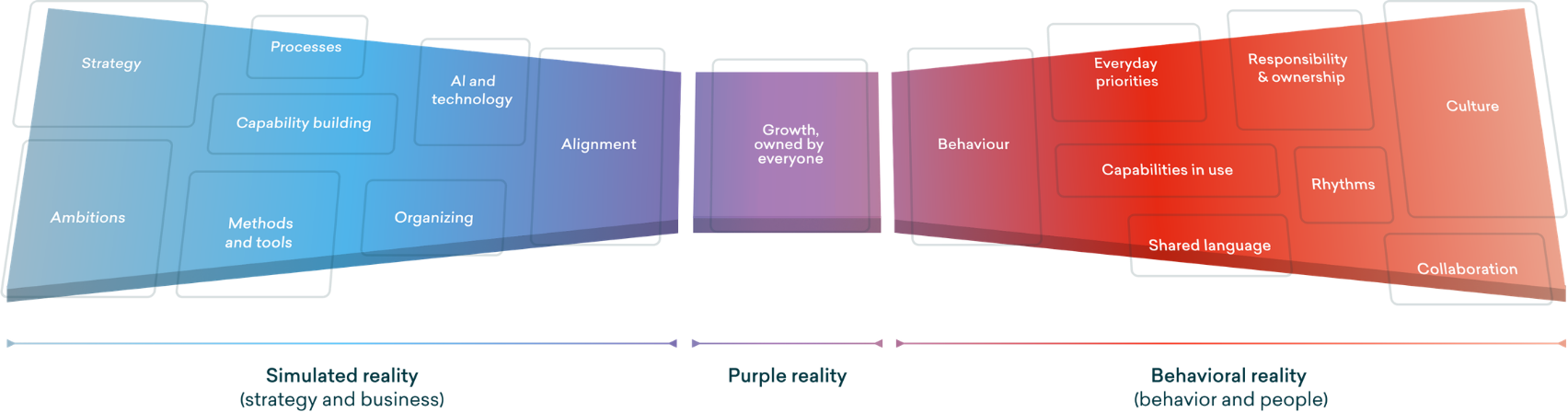
Strategies, processes and tools do not create growth on their own. Neither does behaviour without direction and the right organisational setup. Growth happens where the two meet.

Dansk Cater reinvented the KAM role – and is now driving growth through deeper partnerships and new customers.
Create growth everyone owns
Bringing direction and behaviour together may sound simple. But as McKinsey’s research shows, it is far from easy.
Problems arise in both realities.
You communicate a clear strategy, define an action plan, delegate responsibility and assume that behaviour will follow naturally. It does not. Or you start at the other end, focus on behaviour and make changes that do not support the organisation’s strategic objectives.
One side: Ownership, not just design
Creating a new strategy is easy. The hard part is agreeing on who owns what and how to turn it into reality.
It requires alignment. Everyone needs to agree on what it will take and support the direction. But how do you get there?
By co-creating the strategy. Not by turning every decision into a group exercise, but by involving the leaders and employees who will put the ambitions into practice, at the points where their input matters. This allows the people closest to the work to shape the strategic ambitions and creates real ownership.
Without that ownership, you can design all you want. Whether it is a new strategy, new processes, implementing AI, better leadership or new commercial behaviours. Without ownership, it all stays on slides that no one acts on.
The other side: Behaviour, not just intentions
People want to succeed in their jobs and contribute to growth, both for the organisation and in their own roles. But it takes more than good intentions. It requires the right skills, the ability to collaborate across functions and the capacity to prioritise under pressure.
This may also sound simple. Yet numerous transformation projects have shown us that things often go wrong when a new direction is set, but everyday behaviour remains unchanged.
New behaviour cannot be mandated. You can practise new behaviours, but they only make a difference when they move beyond the training room and are applied to the challenges of everyday work.
This could involve establishing new meeting routines, getting feedback on how you coach and receiving support in adopting new methods and processes. Turning these new and often uncomfortable ways of working into habits takes persistence and deliberate effort.
Purple reality emerges
Succeeding in that process brings us back to the question of ownership. Success depends on whether employees follow the chosen direction because they have to, or take action because they understand the “why”, have helped shape the “how” and receive the support they need to turn good intentions into what they actually do on Monday morning.
Purple reality ermerges when strategy and behaviour work together. When you are truly aligned on the direction, ownership is shared across the organisation, and people have the necessary skills and a common language, you create the conditions for growth – for both the business and its people.
Where is your organisation losing growth potential?
Growth does not happen in one place. It happens wherever strategy must be translated into behaviour. We see this most clearly in two areas: leadership transformation and commercial transformation.

Leadership transformation
The leadership team agrees on the direction, but the organisation does not follow. Because the leadership team acts like a group of soloists, not a team. Day-to-day operations consume all the energy, and strategic momentum disappears. You invest in workshops, but behaviour soon returns to what it was before.
When there is disagreement at the top, it spreads throughout the organisation.
Build a strong leadership team
Bring your leaders together as one team that owns and drives the strategy.
Enable your leaders to take the business from A to B
Give your leaders the skills and structure to move from busy to focused.
Commercial transformation
Sales are not growing as they should — and you cannot pinpoint exactly why.
You report based on gut feeling. Your pipeline is full of deals that never close. Your sellers spend their time as they always have, but you don’t know whether they’re focusing on the right things. The gap in performance between your sellers is too wide. Training alone doesn’t improve results.
Boost sales efficiency
Establish shared commercial approaches that improve sales efficiency within 90 days
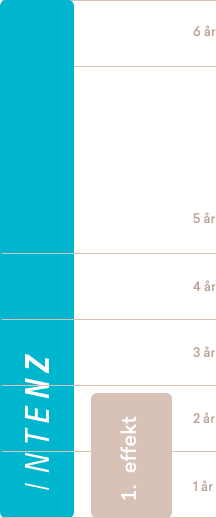
Vi skaber hurtigt resultater, men vores kunder bliver længe.
This is for you if …
You are tired of strategies that end up on a shared drive and workshops that wears off after a few days.
You know that people are essential. But you lack the system that connects strategy with behaviour. You do not just want to keep things running. You want to grow, and you are ready to work with what actually happens day to day.
This is not for you if …
Du vil have en veludarbejdet markedsanalyse med en flot keynote, og strategi for dig betyder en præsentation på det årlige kickoff.
“You see change as replacing people rather than developing them. You would rather have performance reports than a partner who actively engages with your day-to-day challenges.
A transformation partner for organisations seeking lasting growth
On average, our client relationships last 6 years. That’s a long time, and it’s not because we’re slow to deliver results.
Our clients don’t see us as consultants who come and go. They see us as a pragmatic partner who stays and helps them navigate one change after another, working alongside them in their day-to-day business.
When we start working together, you will begin to see a new reality within 90 days. One where strategy comes to life in everyday work, and everyday work drives the strategy forward.